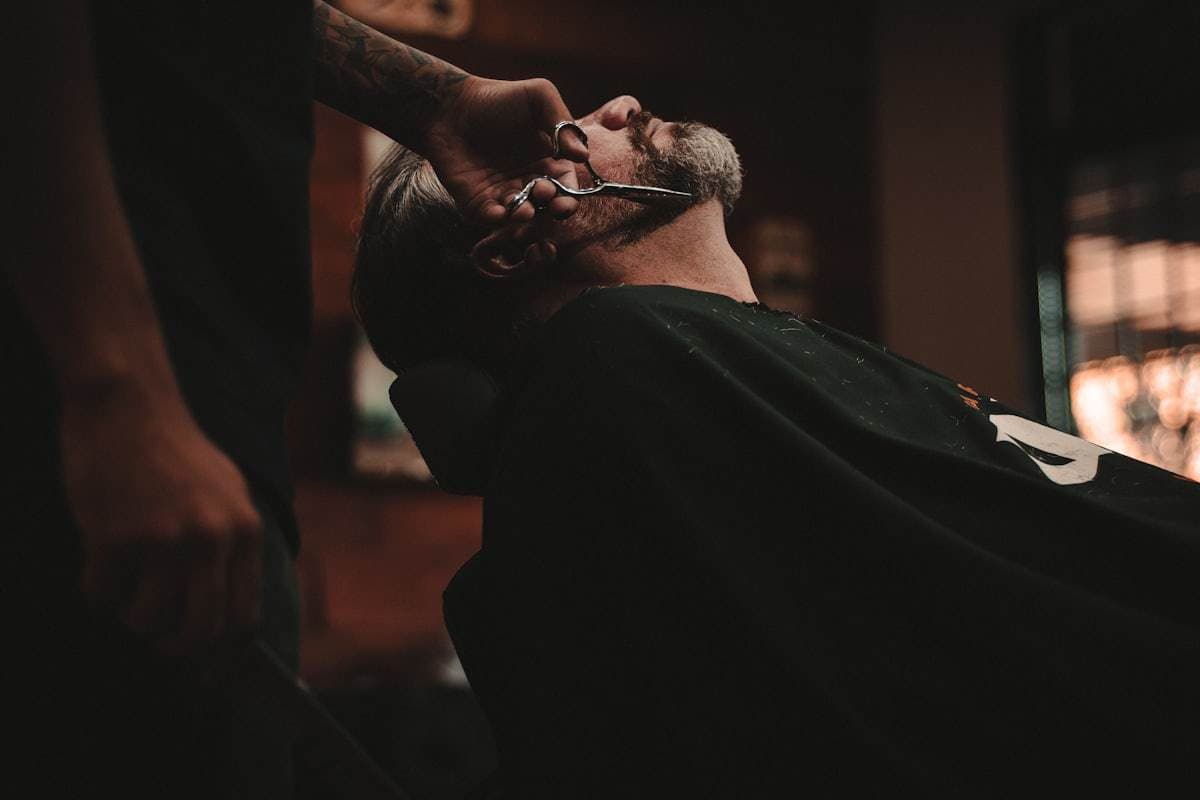
The walk-in barbershop dilemma nobody talks about
Walk-ins are the lifeblood of most barbershops. Unlike salons that run heavily on appointments, most barbershops get the majority of their revenue from walk-in traffic. That makes your shop fundamentally different from almost every other service business, and it means generic scheduling software built for dentists or day spas will never work for you.
Here is the core tension: walk-ins are unpredictable, but your chairs are finite. On a Tuesday afternoon you might have three barbers standing around. On a Saturday morning you have a lobby full of guys getting restless, checking their phones, and eventually walking out the door, taking $30 to $50 with them. The shops that figure out walk-in management keep those Saturday walk-ins without sacrificing the Tuesday experience. The ones that do not bleed revenue they never even see.
Why is the paper sign-in sheet killing your shop?
Most barbershops still use a paper sign-in sheet or a verbal 'who's next?' system. It feels simple, but it is quietly costing you money in ways you probably have not measured.
Scenario: It is Saturday at 10 AM. Your sheet has eight names on it. A guy walks in, sees the list, and asks your barber mid-fade, 'How long is the wait?' Your barber glances at the sheet, guesses 'maybe 45 minutes,' and goes back to cutting. The guy leaves. What actually happened? Three of those eight names were already served, and nobody crossed them off. Two left without telling anyone. The real wait was 15 minutes. You just lost a $35 haircut because a paper list cannot do math.
Paper sheets fail barbershops in specific ways that matter:
No one maintains them in real time. When you are mid-fade with clippers buzzing, you are not walking to the counter to update a clipboard. Names stack up. Crossed-off names are illegible. New walk-ins see a long list and bail before asking.
They cannot handle the 'I want Marcus' problem. Half your walk-ins want a specific barber. A paper sheet has no way to route people to their preferred barber. So either you manage it in your head (which falls apart after the fifth person) or everyone waits in one generic line and gets frustrated when someone who arrived later goes first because they wanted a different barber.
They are invisible to the customer. A guy who puts his name on a paper list has zero information after that moment. He does not know his position. He does not know if the barber he wanted is even working today. He sits, he waits, he gets annoyed, and if it takes five minutes longer than he expected he walks out. Not because the wait was unreasonable, but because uncertainty feels longer than waiting.
What does chair downtime actually cost?
Empty chairs are the silent killer in barbershop economics. Most owners think about revenue in terms of busy days, but the number that matters is chair utilization: what percentage of available cutting time is actually producing revenue. Run the arithmetic for your own shop with your own prices; the table uses a three-chair shop charging $35 for a 30-minute cut.
| Line | Calculation | Result |
|---|---|---|
| Revenue per chair per hour at capacity | $35 x 2 cuts | $70 |
| Theoretical daily maximum | $70 x 10 hours x 3 chairs | $2,100 |
| Downtime per day | 20 minutes x 3 chairs | 1 hour |
| Lost per day | 1 hour x $70 | $70 |
| Lost per week | $70 x 6 days | $420 |
| Lost per year | $420 x 52 weeks | $21,840 |
Twenty minutes a chair is one walk-in who leaves because the wait looked long, one gap because nobody knew who was next, and one mix-up on the rotation. Not because customers were not there. Because you could not see them, route them, or hold them.
A barbershop waitlist app does not magically create more customers. What it does is make sure the customers who do walk in actually make it to a chair instead of walking back out.
Walkout blindness: the revenue leak you cannot see
Here is the most dangerous thing about losing walk-ins: you do not know it is happening. A guy who walks in, sees a crowded lobby, and turns around before ever putting his name down does not show up in any system. He is a ghost. Your books look the same whether you lost zero walk-ins or twenty.
Without a check-in system that records who joins the line and who you had to remove before they were served, you have no idea what your real walkout rate is. You might think Saturday was a great day because every chair was full. But what about the people who left because they could not get a realistic wait time?
A digital queue changes this completely. When every walk-in checks in, even the ones who leave two minutes later, you have a record. Imagine looking back at a Saturday and seeing that 40 people checked in but 12 had to be removed before they were served. At $35 per cut, that is over $400 left on the table in a single day. That number turns 'we had a good Saturday' into 'we need to fix Saturday.'
Preferred barber lines and why they drive retention
Barbershops are a relationship business. A guy does not just want a haircut. He wants his haircut from his barber. Regulars who stick with the same barber come back more often, spend more per visit, and refer their friends. The barber-client relationship is your most valuable revenue stream, and a queue system that ignores it works against you.
The fix is to let the walk-in say who they want. Give each barber their own queue, or add a preferred-barber field to the check-in form and offer 'first available' as an option. Either way the customer lands where they meant to, and the shop sees the real picture. This solves two problems at once.
Scenario: Marcus has three people waiting. Dev has zero. Without barber selection, the next walk-in goes to Dev, even if he specifically came in for Marcus. With it, the customer sees the real picture: Marcus has a wait, Dev is available now. The customer makes an informed choice. Maybe he waits for Marcus. Maybe he tries Dev today. Either way, he does not sit for 45 minutes only to discover he was next for the wrong barber.
This also helps your newer barbers build clientele. When customers can see that a newer barber has a short wait, some will take the chance, especially if they are in a hurry. Without visibility, they default to 'I will just wait for my usual guy,' which keeps your new hire sitting idle.
Service-aware waits: a fade is not a buzz cut
One of the biggest failures of generic waitlist tools in a barbershop is that they treat every service the same. A buzz cut takes 10 minutes. A skin fade with a beard lineup takes 45. If your system tells a walk-in 'three people ahead of you' without knowing what those three are getting, any wait estimate you quote is a guess.
Scenario: Three guys are ahead of Mike in the queue. Your barber quotes 'about 30 minutes' based on a typical cut. But those three guys all want fades. The real wait is over an hour. Mike is furious by minute 40 and leaves a one-star review about lying about wait times. Nobody lied. The list just could not tell the difference between a $15 buzz and a $45 fade.
The fix is to track services, not just names. When customers select their service at check-in, you and your barbers see exactly what work is ahead, and the estimate adds up the real service times and divides by the chairs actually cutting. A queue that reads '2 fades, 1 beard trim' tells you something a list of three names never could, and it lets you quote waits customers can trust. The wait time calculator shows the arithmetic.
Managing the Saturday rush with real data
Every barbershop owner knows Saturday is the big day. But 'Saturday is busy' is not actionable. What time does the rush start? When does it peak? When does it taper off enough to send someone on break?
A queue system with analytics answers these questions with data, not gut feeling. After a few weeks you can see that your rush starts at 9:30 AM, peaks between 11 AM and 1 PM, and drops off around 3 PM. That changes how you staff.
Before data: You schedule all four barbers 9 AM to 6 PM on Saturdays. By 3 PM two barbers are idle. You are paying for 36 labor hours but only need 28.
After data: You stagger shifts. Two barbers open at 9 AM. The third comes in at 10 AM for the rush. The fourth covers 11 AM to 5 PM. You cut 8 labor hours without losing a single customer. If your barbers are commission-based, they are happier too. Nobody likes standing around with no clients.
The phone interruption problem
Your phone rings. A barber stops mid-fade to answer because nobody else is free. 'How long is the wait right now?' He glances around, guesses, gives an answer that might be wrong, and goes back to cutting. But he has lost his rhythm, the client in the chair feels deprioritized, and the caller might not even show up.
This can happen a dozen times a day in a busy shop. At a couple of minutes per call, that is a real chunk of cutting time burned on questions a digital queue could answer automatically.
Scenario: A potential walk-in pulls up your shop's queue page on his phone before leaving the house. He can see there is a line, but it is moving. He checks in remotely and heads over. No phone call. No interruption. No guessing. The barber in the chair gets undivided attention, and the walk-in shows up with accurate expectations.
QR code check-in built for barbershops
The fastest way to get walk-ins into your queue is a QR code on the door or at the counter. The customer scans it with their phone camera (no app download, no account) and they are in. They pick their service, choose their preferred barber, enter their name and phone number, and they are checked in.
Why this works specifically for barbershops: your customers are comfortable with phones but allergic to friction. They will scan a QR code. They will not download an app. They will not create an account. They will not fill out a form with 10 fields. Keep the check-in to name, phone, service, done.
Once checked in, the customer gets a text with their place in line. They can leave to grab coffee, sit in their car, or browse the shops nearby. When they are next, they get a text. No shouting names across the shop. No 'was it Mike or Mark?' confusion. No one missing their turn because they stepped outside.
Self check-in kiosk at the door
For shops that want a more visible system, a self check-in kiosk works perfectly. Mount a tablet by the entrance running kiosk mode. Every walk-in taps through the same flow (service, barber preference, name, phone) and joins the queue without any barber needing to stop what they are doing.
This is particularly effective for barbershops because it solves the 'walk in and stand there awkwardly' problem. New customers do not know the shop's system. Do they put their name on a list? Do they just sit down? Do they interrupt a barber? A kiosk at the door answers the question immediately: tap here, you are in line.
The kiosk resets after each check-in, so the next person never sees someone else's info. It works on any iPad or Android tablet with no special hardware. Open the URL, enable full-screen mode, and you have a professional check-in station for the cost of an inexpensive tablet. Add a TV showing who is up next and you have a take-a-number system without the ticket roll.
Combining appointments and walk-ins without conflict
Some barbershops are moving toward a hybrid model: walk-ins welcome, but appointments available for customers who want a guaranteed time. The challenge is running both without creating conflicts or confusing your barbers.
Without a system: Marcus has a 2 PM appointment booked. At 1:45 he starts a walk-in fade that will take 40 minutes. The 2 PM shows up, sees Marcus mid-cut, and waits. And waits. By 2:25 he is frustrated. The walk-in after him is confused about who is next. Marcus is stressed. Everyone loses.
With a system: Marcus's queue shows his 2 PM appointment right alongside his walk-in line. At 1:30 he can see it coming, so he takes a quick buzz cut instead of starting a 40-minute fade. He finishes at 1:50 and is ready for his 2 PM. The appointment starts on time. Walk-ins keep flowing to the other chairs. No conflict, no stress.
MakeTheQueue puts walk-ins and appointments in one view so your barbers always know what is coming next. Customers can book ahead from the same page where walk-ins check in, so you are not managing two separate systems.
Stop guessing, start managing your walk-ins
The difference between a barbershop that grows and one that stays stuck is not talent. It is systems. Every shop has great barbers. The ones that thrive have visibility into their queue, a record of their walkouts, and tools that keep customers engaged instead of frustrated.
Paper sign-in sheets made sense in 2005. Today they leave thousands of dollars on the table every month. A barbershop check-in system is not about being high-tech. It is about knowing who is waiting, who left, and who is next, so that every chair stays full and every walk-in becomes a regular.
MakeTheQueue was built for exactly this: QR check-in, preferred-barber routing, service tracking, kiosk mode, appointments and walk-ins in one view, and analytics that show you what your Saturdays actually look like. It starts free, paid plans are one flat monthly price with no per-seat fees, and setup takes under 15 minutes. You can see the difference by your next Saturday rush.