Never lose another walk-in to an unknown wait
Walk-ins are ready to buy the moment they arrive, and they're the easiest customers to lose. MakeTheQueue captures every arrival, routes them by service type, merges them with scheduled appointments, and sends SMS updates so nobody leaves because they didn't know how long it would take.
No credit card required · Free plan included
What walk-in management software actually does
Walk-in management software is built for businesses where most customers arrive without an appointment. It handles the specific chaos of unpredictable arrivals: sudden surges at lunch or after school, preferred-provider routing, service-type-aware wait estimates, and merging walk-ins with pre-booked appointments in one queue. Walk-ins are the most valuable customers to keep: they're already at your door, ready to spend, but they're also the easiest to lose because nothing holds them there.
- Captures every walk-in the moment they arrive, via QR code, kiosk, or staff entry
- Routes customers by service type and preferred provider, not just arrival order
- Merges walk-ins with scheduled appointments in one unified queue, with no double-booking
- Calculates service-specific wait estimates (a haircut takes 20 min, a color takes 90 min)
- SMS notifications let walk-ins leave and return instead of standing around watching the clock
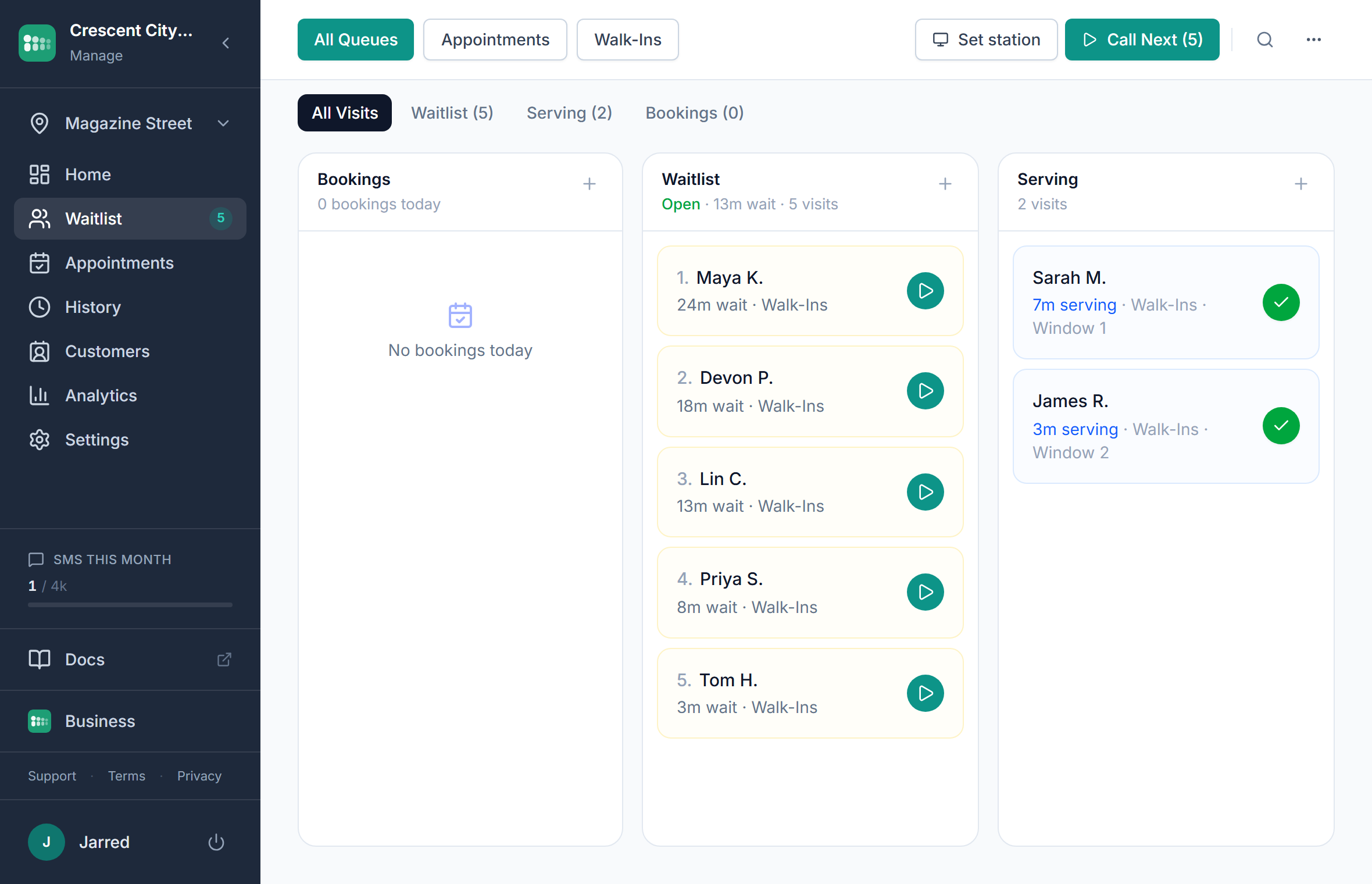
- The live dashboard makes surges obvious the moment they start, so staff can adjust in real time
Everything you need
Instant walk-in capture
QR code at the door, a kiosk on the counter, or staff tap-to-add. Every walk-in is in the system within seconds of arrival. No clipboard, no 'I'll be right with you,' no lost customers.
Service-type routing
Walk-ins select what they need when they join. A quick trim goes to the next available barber. A full color goes to the specialist with the right slot. The queue is smart, not just sequential.
Walk-in + appointment merge
Appointments hold their reserved slots. Walk-ins fill the gaps. Staff see one unified timeline: no juggling two systems, no accidental double-books, no confused customers.
Service-aware wait estimates
A simple check-in takes 5 minutes. A full consultation takes 45. The system knows the difference and calculates wait times based on what each person ahead actually needs, not a flat average.
Spot surges as they happen
The dashboard shows live queue length and wait estimates at a glance. When walk-in volume spikes, staff see it immediately and can open another chair, call in backup, or reset expectations before customers start leaving.
Two-way SMS for walk-ins
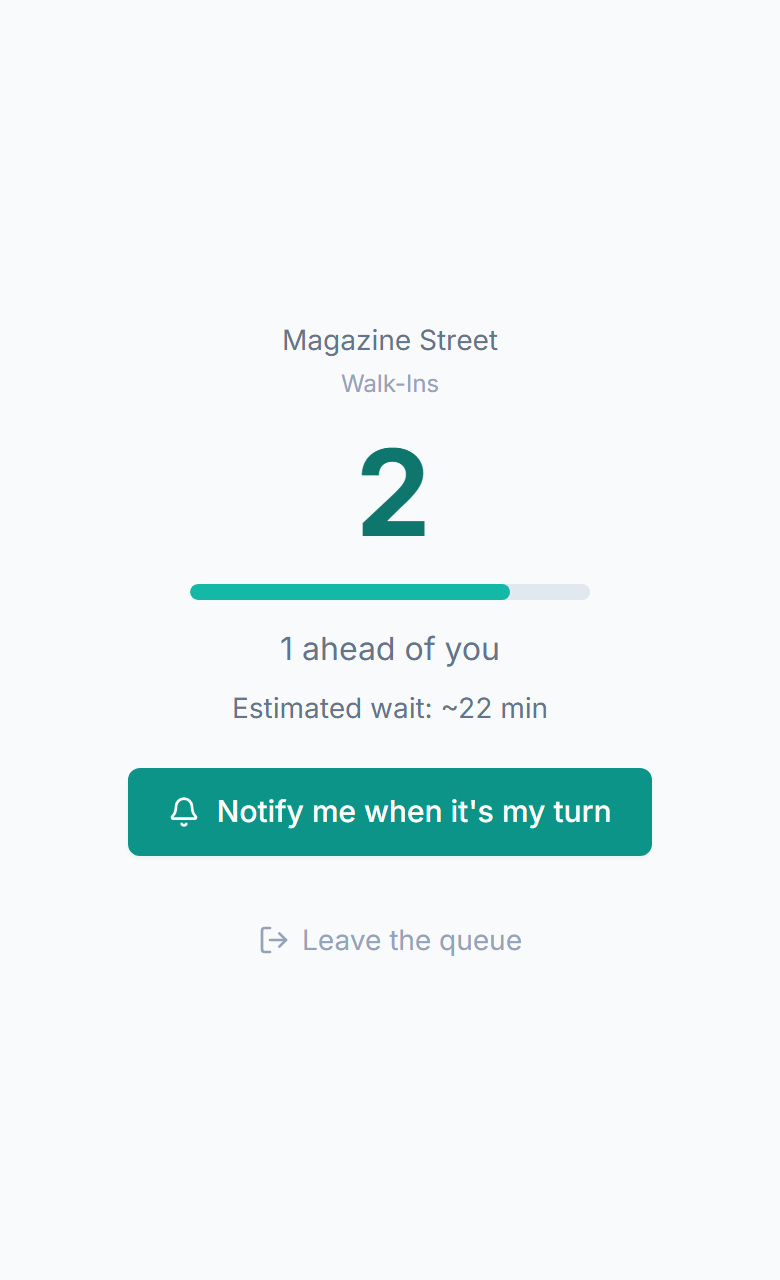
Walk-ins get a text confirmation and can leave. They reply to ask 'how much longer?', update their service choice, or cancel. Staff respond from the dashboard without picking up the phone.
The walk-in management cycle
Walk-in traffic is inherently unpredictable. The software creates a repeatable cycle that converts chaos into flow.
Customer walks in and joins via QR code, kiosk, or staff entry, selecting their service type
System calculates a service-specific wait estimate based on what each person ahead needs
Customer receives SMS confirmation with position, estimate, and a live status link
Customer decides: wait in the lobby, browse nearby, or sit in their car
As their turn approaches, an SMS alert brings them back and ready
Staff serves the customer; the system logs service type, wait time, and duration
Analytics update in real time, showing surge patterns, popular services, and staffing gaps
How walk-in management works across industries
Barbershop
Saturday walk-ins pick their barber and service type on the join screen. The system estimates wait based on who's ahead and what they're getting. A guy wanting a trim doesn't wait behind three full beard-and-haircut combos without knowing. The barber sees what's coming and can prepare.
Urgent care clinic
Patients walk in without an appointment and select their reason for visit. The triage nurse sees the queue ordered by arrival with service type visible. Patients wait in their car and get texted when an exam room opens. The waiting room stays empty, and patients feel safer.
Restaurant
Friday evening walk-ins compete with reservations. The system holds reserved tables for their time slot and seats walk-ins in the gaps. The host sees one screen: who's reserved, who walked in, what tables are available, and who should be seated next.
Auto service center
Walk-in customers select oil change, tire rotation, or inspection. The system routes them to the right bay and estimates wait based on the services ahead: an oil change takes 20 minutes, a brake job takes 90. Customers leave and get texted when their car is next.
Retail store
Walk-ins needing personal shopping help, tech support, or returns join the queue and select their need. The system routes them to the right department. They keep shopping while they wait, which often means a bigger basket at checkout.
Tattoo studio
Walk-ins wanting small flash tattoos join the queue with their selection. Artists see what's queued and estimate time based on the piece. Customers leave to grab lunch and come back when the artist is ready. No wasted chair time, no lost walk-in revenue.
What happens when you manage walk-ins digitally
Fewer walkouts during surges
Walk-ins leave when they don't know how long the wait is. Giving them a real estimate and SMS updates converts 'I'll come back another time' into 'I'll go grab a coffee and wait for the text.' The uncertainty, not the wait itself, is what drives people away.
More walk-ins served per day
Faster transitions between customers, no dead time between serve and next arrival, and service-type routing that matches the right customer to the right provider. The gains add up across every hour you're open.
Balanced appointment + walk-in flow
Without software, staff either over-book appointments (leaving no room for walk-ins) or under-book (losing revenue). The merged queue shows real-time capacity, so you can accept walk-ins confidently without risking appointment delays.
Staffing decisions based on walk-in data
Paper lists can't tell you that Saturday lunchtime brings several times your usual walk-in volume. Digital walk-in tracking gives you demand curves by hour, day, and service type, so you staff to match the pattern.
Why MakeTheQueue vs. alternatives
vs First-come-first-served honor system
- No arguments about who was here first: the system tracks arrival order automatically
- Service-type routing means short services aren't stuck behind long ones unnecessarily
- Customers see their position instead of guessing, eliminating frustration and confrontation
- Staff focus on serving, not mediating disputes about queue position
vs Appointment-only booking systems
- Walk-ins, your most spontaneous and ready-to-buy customers, aren't turned away
- No empty slots from no-shows; walk-ins automatically fill appointment gaps
- Customers who can't plan ahead still get served instead of being sent away
- The merged queue handles both scheduled and spontaneous arrivals in one system
vs Generic queue management tools
- Service-type-aware routing, not just first-in-first-out ordering
- Walk-in + appointment merging built in, not bolted on
- The live dashboard makes volume spikes obvious before customers start leaving
- Wait estimates factor in what each person ahead needs, not a flat average
Frequently asked questions
Walk-in management software is designed for businesses where most customers arrive without an appointment. It captures walk-ins digitally, routes them by service type, calculates accurate wait estimates, and sends SMS notifications. It also merges walk-ins with scheduled appointments in one queue so staff don't have to juggle two systems.
Regular queue management treats everyone the same: first in, first out. Walk-in management adds service-type routing (a quick trim and a full color have different wait implications), appointment merging (walk-ins fill gaps between bookings), and surge visibility (the live dashboard makes volume spikes obvious as they happen).
Yes. MakeTheQueue merges both into one queue. Appointments hold their reserved time slots, and walk-ins fill the gaps. Staff see a single unified view, with no switching between an appointment calendar and a walk-in list.
When customers join, they select their service type. The system knows a quick trim takes 15 minutes and a color treatment takes 90. It calculates each customer's wait based on what every person ahead of them actually needs, not a flat average across all service types.
Two things retain walk-ins: information and freedom. MakeTheQueue gives them a real wait estimate (not 'it'll be a while') and SMS notifications so they can leave and come back. Customers usually give up because of uncertainty, not the wait itself. Remove the uncertainty, and most will stay.
No. Walk-ins join via a QR code at your door, a link on your website, a kiosk on the counter, or staff adding them manually. Everything works through a web browser, with no app download, no account, and no friction.
Built for your industry
Simple pricing. Start free, upgrade when you need more.
Start on Starter with every core feature from day one, or pick Business for analytics, exports, and multi-location. Full Business trial on every new account.
Start Free Trial